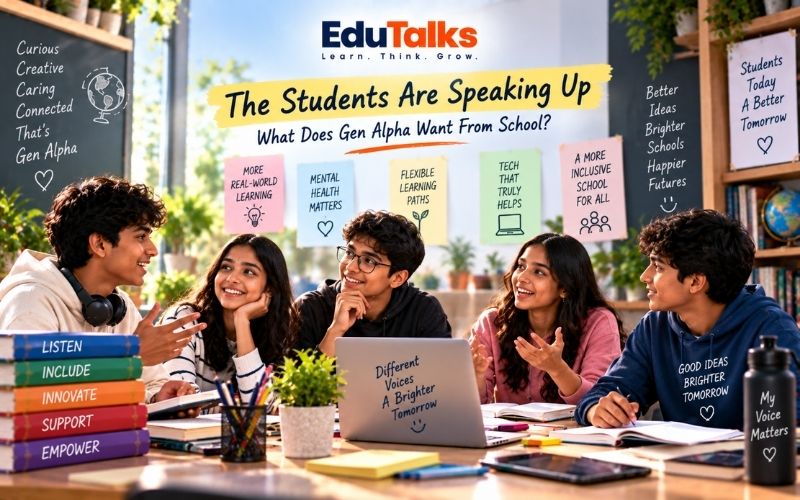
The Students Are Speaking Up What Does Gen Alpha Want From School?
The Students Are Speaking Up
What Does Gen Alpha Want From School?
They have grown up with smartphones, YouTube, AI, instant answers and a world changing faster than their textbooks. So what happens when this generation walks into a school built around yesterday's expectations?
```Ask a student what they want from school and you might expect a simple answer.
Better teachers.
Less homework.
More holidays.
Better marks.
But listen a little longer and something more interesting appears.
Students want to be heard.
They want to understand why they are learning something.
They want technology to be used intelligently—not simply banned or blindly celebrated.
They want mental space.
They want teachers who can guide them rather than simply dictate to them.
The question isn't whether students are right about everything.
It's whether we're listening enough to know what they're asking for.
Meet the generation that grew up online
Gen Alpha is generally used to describe the generation born from the early 2010s onward, although the exact boundaries vary depending on the source.
What matters more than the label is the environment in which these children have grown up.
They have seen smartphones become normal.
They have watched classrooms move between physical and digital spaces.
They have grown up with short-form video, online communities, gaming, streaming and increasingly, artificial intelligence.
For them, information is rarely far away.
The challenge for schools is no longer simply giving students information. It's teaching them what to do with it.
“I can find the answer in 10 seconds.”
This is one of the biggest changes education faces.
A student can search for a definition, watch an explanation, ask an AI tool for examples or find a tutorial almost instantly.
That doesn't mean students don't need teachers.
It means the teacher's role becomes even more important.
If a machine can provide an answer, students need people who can help them decide whether the answer is correct.
If an algorithm can generate an essay, students need to learn how to develop an original argument.
If YouTube can explain photosynthesis, teachers need to help students go beyond watching and start thinking.
The future of education isn't information versus teachers.
It's teachers helping students make sense of unlimited information.
So, what do students actually want?
There isn't one answer. Students are not a single group, and what works for one learner may frustrate another.
But several themes keep appearing in conversations about the future of school.
01 — “Tell us why this matters.”
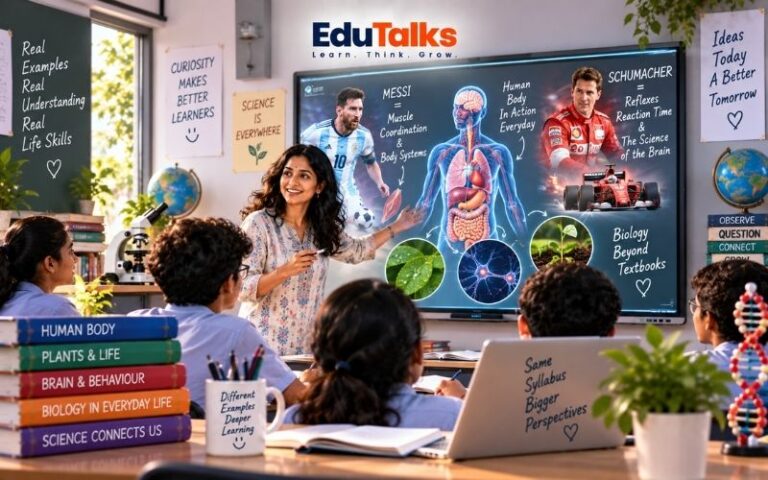
Students don't necessarily need every lesson to be entertaining. They want to understand how knowledge connects to life, future careers or the world around them.
02 — “Let us ask questions.”
A classroom where only the teacher asks questions can make learning feel one-directional. Students want room to challenge ideas, explore alternatives and say, “What if?”
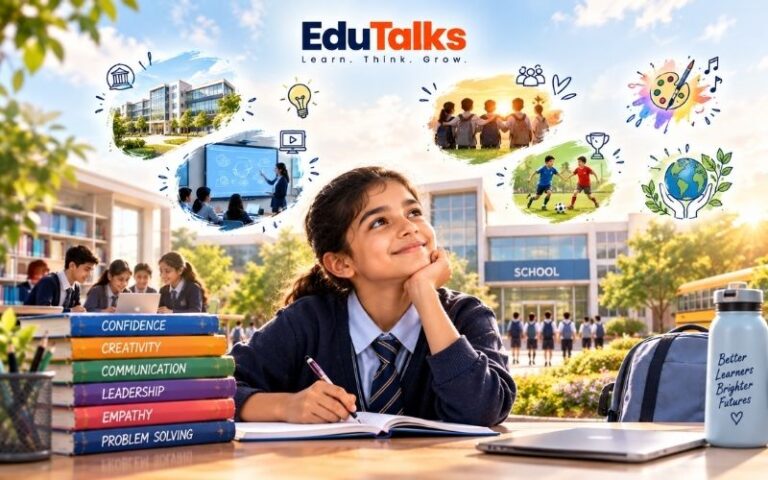
03 — “Teach us skills, not just answers.”
Communication, critical thinking, collaboration, digital literacy and problem-solving matter in a world where information is increasingly automated.
04 — “Give us some ownership.”
Students often become more engaged when they have choices about projects, topics, reading, research or how they demonstrate learning.
05 — “Don't make every mistake a disaster.”
Students need high expectations, but they also need space to experiment, fail, receive feedback and improve without feeling that one mistake defines them.
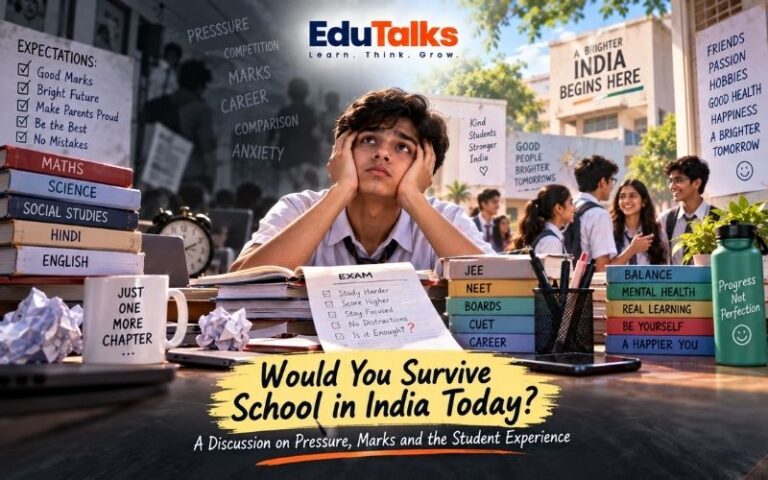
And then there's the marks problem
Let's be clear: marks matter.
Examinations can open doors. Academic achievement can create opportunities. Students should absolutely be encouraged to take their studies seriously.
But when marks become the only measure of success, something gets lost.
What about the student who can build things but struggles with written exams?
The student who is an extraordinary communicator?
The student who can lead a team?
The student who asks questions that nobody else thought of?
A report card can measure performance. It cannot capture the entire person.
“Can we use our phones?”
This question can start an argument in almost any school.
And the answer shouldn't simply be “yes” or “no.”
Smartphones can distract students. They can interrupt concentration and create new challenges around social media, privacy and online safety.
But technology can also provide access to information, creative tools, educational resources, collaboration and new ways of learning.
The bigger educational question is not “How do we stop students using technology?”
It is “How do we teach students to use technology responsibly?”
And now AI has entered the classroom
Artificial intelligence has made the old debate about technology even more complicated.
Students can use AI to brainstorm ideas, explain difficult concepts, practise questions, translate text, generate examples and receive feedback.
They can also misuse it.
That means schools face a new responsibility.
Students don't just need rules for AI.
They need AI literacy.
They need to understand what AI can do, where it can make mistakes, how to verify information, how to protect personal data and when using AI stops being learning and becomes simply outsourcing the thinking.
Students don't need teachers to become their friends.
They need teachers who respect them enough to listen.
There is a difference between lowering standards and changing the way students experience those standards.
A teacher can demand excellent work while still allowing students to question an idea.
A teacher can maintain discipline while treating students with dignity.
A teacher can say “no” while explaining why.
Authority and empathy don't have to compete.
```Your child may not need another lecture.
They may need a conversation.
Ask what they liked about school today.
Ask what frustrated them.
Ask which teacher they learn best from—and why.
Ask what they would change if they were principal for one day.
You may learn more from those answers than from another test score.
```It probably wouldn't mean “no rules” or “no exams.”
It might mean more meaningful projects, better conversations, relevant examples, greater choice, healthier use of technology, stronger career exposure and more opportunities to learn from mistakes.
```But students don't have all the answers either
Listening to students does not mean giving students everything they ask for.
Schools still have responsibilities.
Children need structure. They need boundaries. They need to learn subjects they may not initially enjoy. They need to develop the ability to concentrate even when something isn't immediately exciting.
Sometimes a good teacher has to say:
“I know you don't like this. But I also know you are capable of doing it.”
Listening is not the same as agreeing.
It means taking the person's experience seriously.
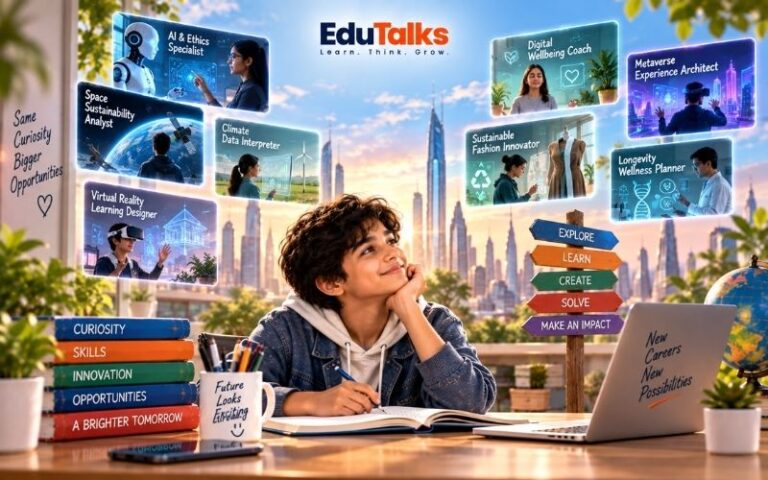
So what should school look like in 2030?
Perhaps the answer isn't a school without textbooks.
Or a school where every lesson is digital.
Or a school where students choose everything.
Perhaps it is a school where traditional knowledge and new technology work together.
Where teachers remain essential but their role evolves.
Where exams still exist but don't define everything.
Where students learn how to use AI without becoming dependent on it.
Where curiosity is encouraged without sacrificing discipline.
The school of the future may not look completely different.
But the way students experience it could be.
Maybe the future of education begins with one simple change:
We stop talking about students and start talking with them.
```Students don't know everything about education.
Neither do parents.
Neither do teachers.
That's precisely why the conversation matters.
Because the students sitting in today's classrooms will be the adults designing tomorrow's world.
Maybe we should start asking them what kind of school they want to inherit.
In 30 Seconds
```- Gen Alpha is growing up with smartphones, digital media and AI as part of everyday life.
- Students increasingly need schools to explain why learning matters, not simply what they need to memorise.
- Technology should be taught responsibly rather than treated only as a distraction.
- AI makes critical thinking, verification and digital literacy even more important.
- Students need both freedom and structure, not one at the expense of the other.
- Listening to students doesn't mean agreeing with everything they say—it means taking their experience seriously.